Bridging computational and cultural analysis of world narratives — exploring the deep structures of indigenous oral traditions through structuralist and post-structuralist frameworks.
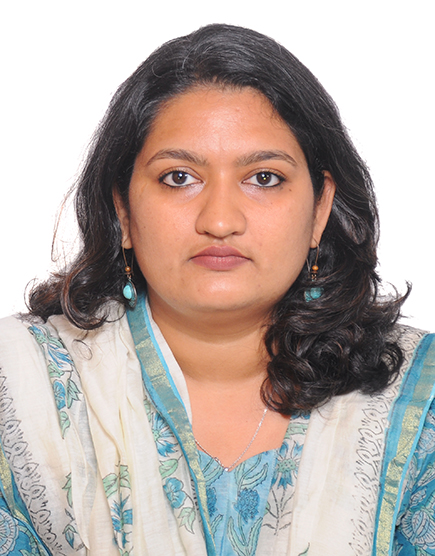
Dr. Haseena Naji is an Assistant Professor (Grade 1) at the School of Social Sciences and Languages, VIT Chennai. She is a folklorist and narratologist specializing in the structural analysis of non-Western oral narratives, with particular focus on the indigenous Kurichyan tribal community of Wayanad, Kerala.
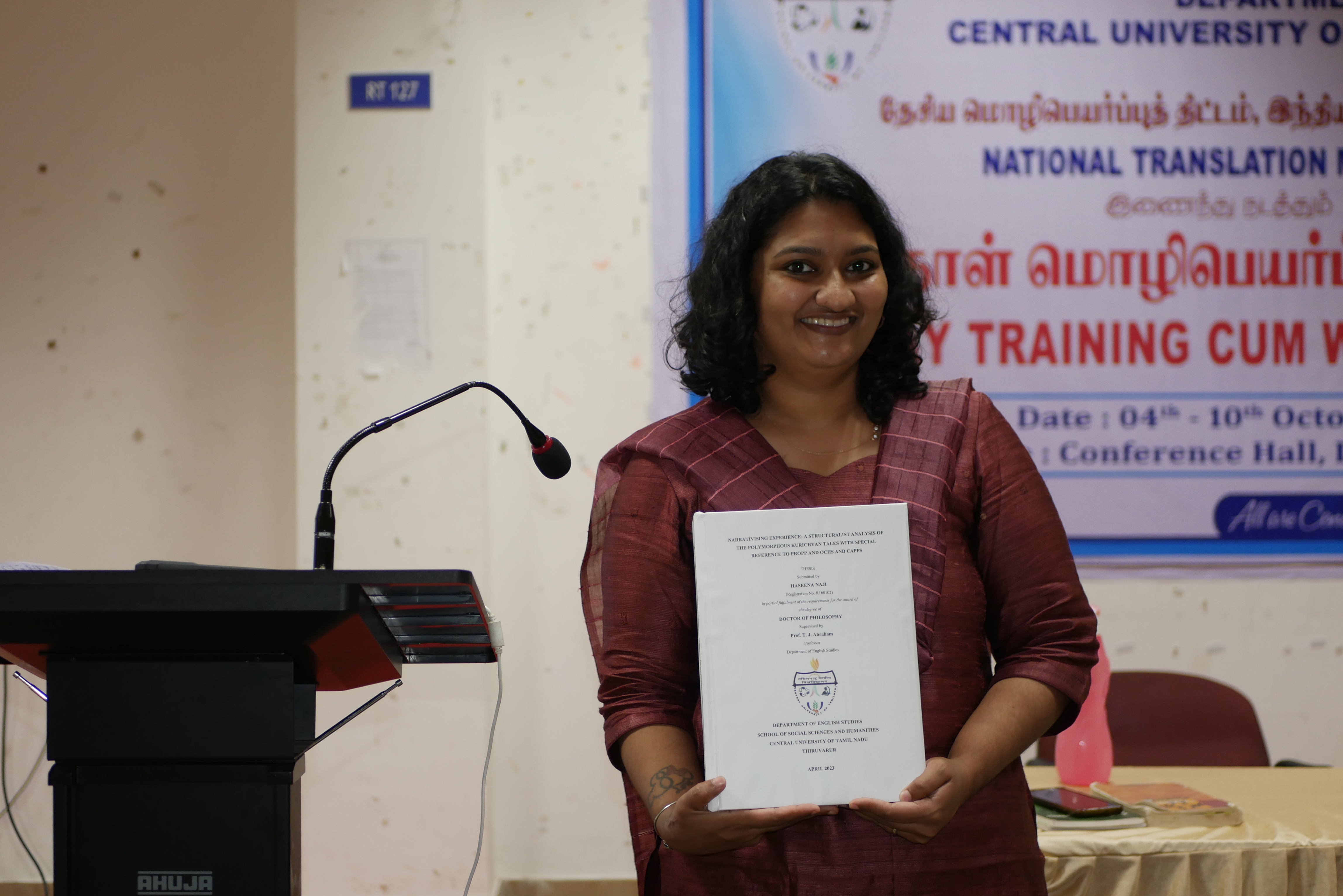
Her doctoral thesis, “Narrativising Experience: A Structuralist Analysis of the Polymorphous Kurichyan Tales with Special Reference to Propp and Ochs and Capps” (Central University of Tamil Nadu, 2024), argues that universal structural frameworks like Propp’s are insufficient for capturing the semantic richness of indigenous oral narratives, and that incorporating Ochs and Capps’ dimension of linearity provides a more comprehensive analytical lens.
Before her doctoral studies, she worked with educational institutions in rural areas, including Auroville, Pondicherry, focusing on community education and empowerment. She holds a postgraduate degree in English Language and Literature from Fatima Mata National College, Kollam, Kerala.
My research sits at the intersection of narratology, folklore studies, and structural analysis, seeking to understand how indigenous oral traditions encode cultural knowledge through narrative form.
Exploring the formal structures and dimensions of storytelling across cultures and traditions.
Applying and critiquing structuralist methods in the study of folk narratives, moving beyond Eurocentric models.
Documenting and analyzing the Kurichyan tribal traditions of Wayanad, Kerala — their stories, structures, and cultural significance.
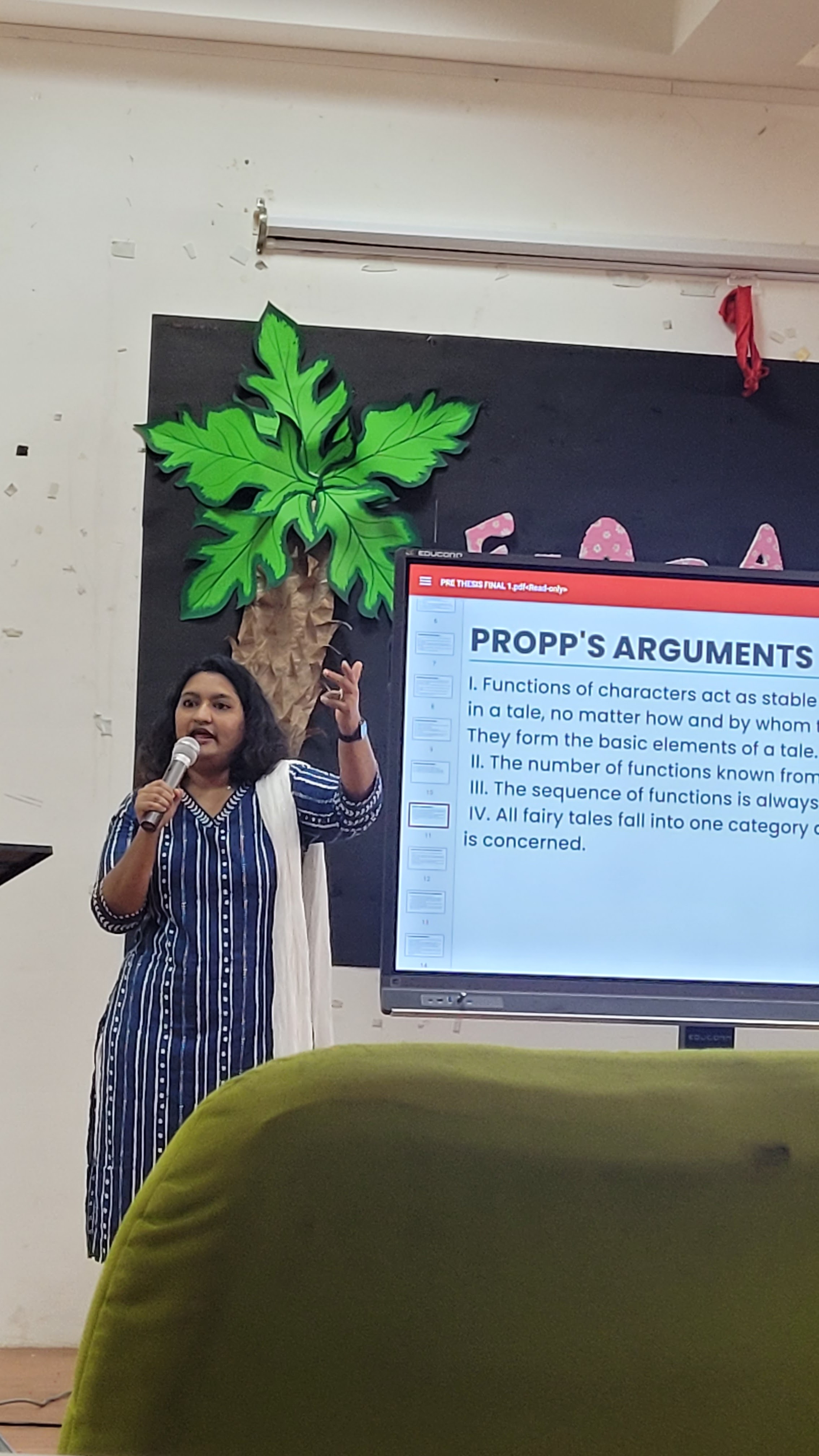
Extending and recontextualizing Vladimir Propp’s 31 narrative functions for non-Western tale traditions.
Integrating dimensions of tellership, embeddedness, linearity, tellability, and moral stance into structural analysis.
Examining the intersections of gender, ecology, and indigenous knowledge systems in narrative traditions.
Studying myths and folk traditions as repositories of cultural memory and collective wisdom.
Exploring the rich literary and oral traditions of India’s North Eastern states.
Analyzing the discursive strategies and pragmatic dimensions of indigenous storytelling practices.
Ethnographic study of the rituals and ceremonies of the Kurichyan community in Wayanad, Kerala, India — documenting and analyzing the living ceremonial practices that sustain indigenous cultural identity.
Argues that Propp’s morphological framework alone falls short for capturing the semantic richness of Kurichyan tales; incorporating Ochs and Capps’ dimension of linearity provides a deeper, more comprehensive analytical lens for indigenous oral narratives.
Investigates the construction and reinforcement of gender norms — hegemonic femininity and masculinity — in Kerala SCERT textbooks used in upper primary education (Classes 5 through 7).
Rupkatha Journal on Interdisciplinary Studies in Humanities, Vol. 14, Issue 3, 2022
A comparative Proppian analysis examining the oral narratives of the Kurichyan community of India and the Guarani of Paraguay, revealing how structuralist methods illuminate both convergences and divergences across culturally distant traditions.
A structural analysis of the origin myth of Malakkari in the Tree Song (Marmaaya Pattu) tradition of the Kurichyan tribe, demonstrating how Proppian functions manifest in and must be adapted for this indigenous narrative form.
Chapter 22 in Interstices of Space and Memory (Routledge, 2025)
Explores Henri Lefebvre’s conceptualization of urban space and its implications for understanding the production of space, memory, and social relations in the contemporary city.
Kristu Jayanti College, Bengaluru
2024NIT Tiruchirappalli, in partnership with UNESCO Chair in Vulnerability Studies, University of Hyderabad
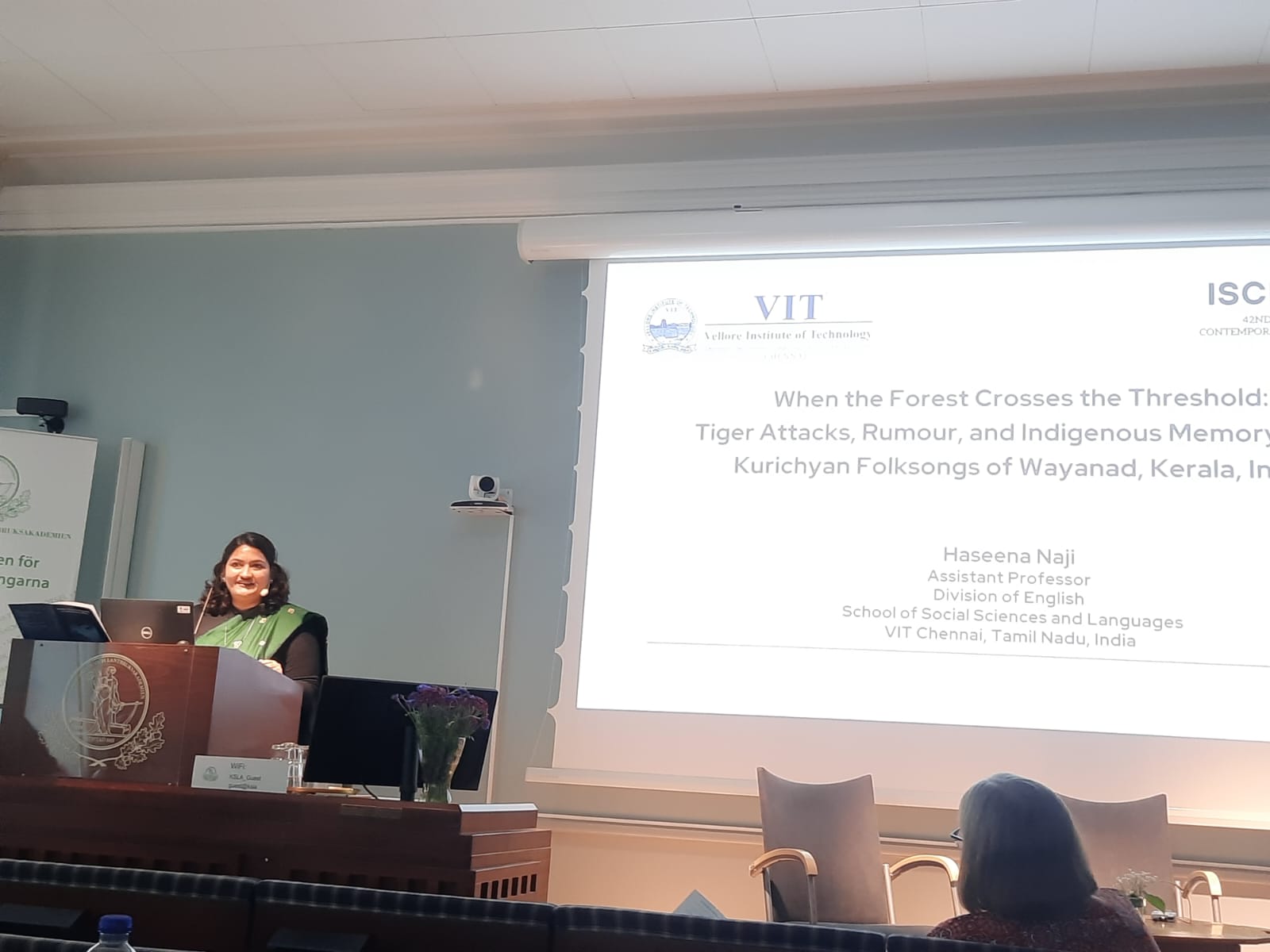
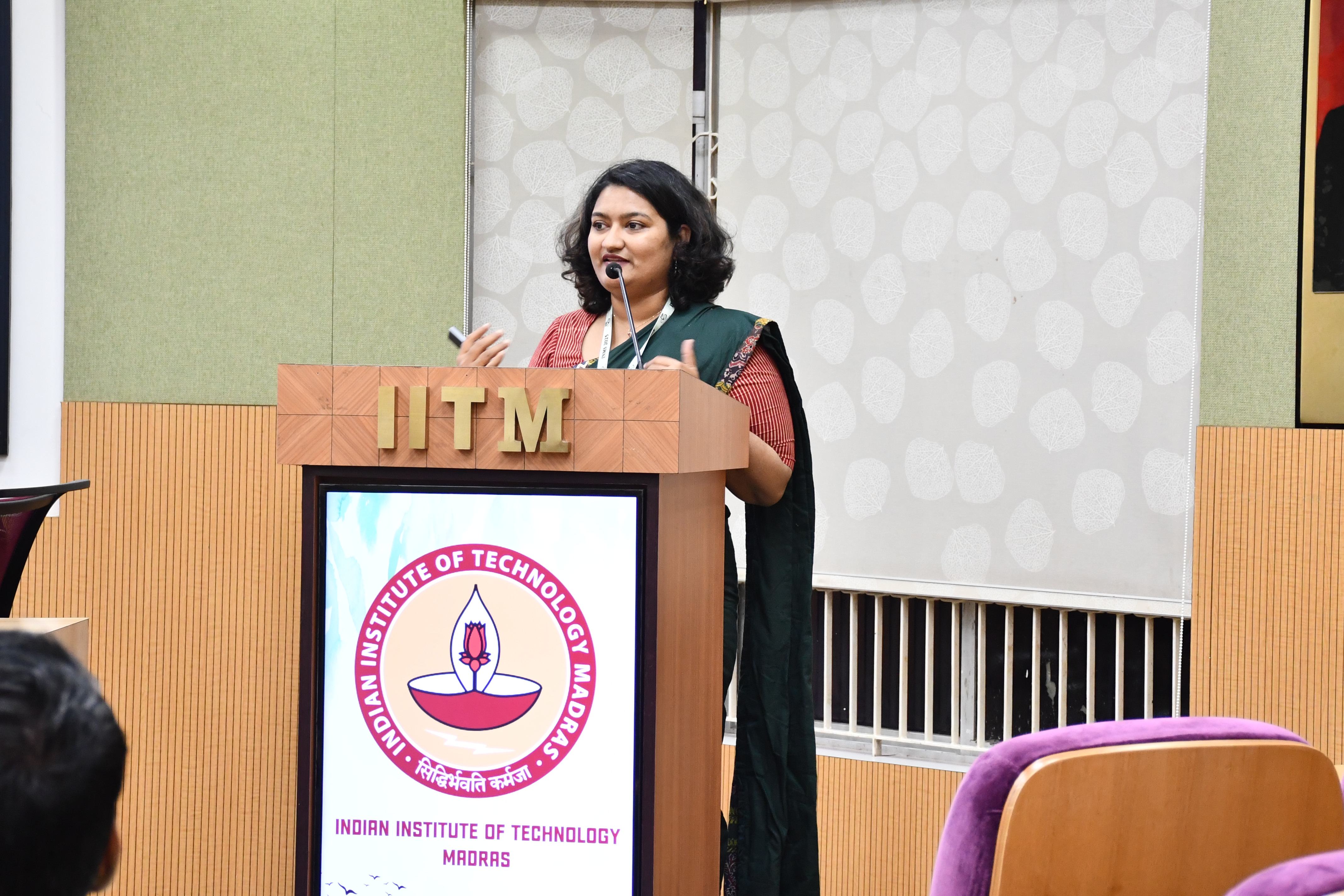
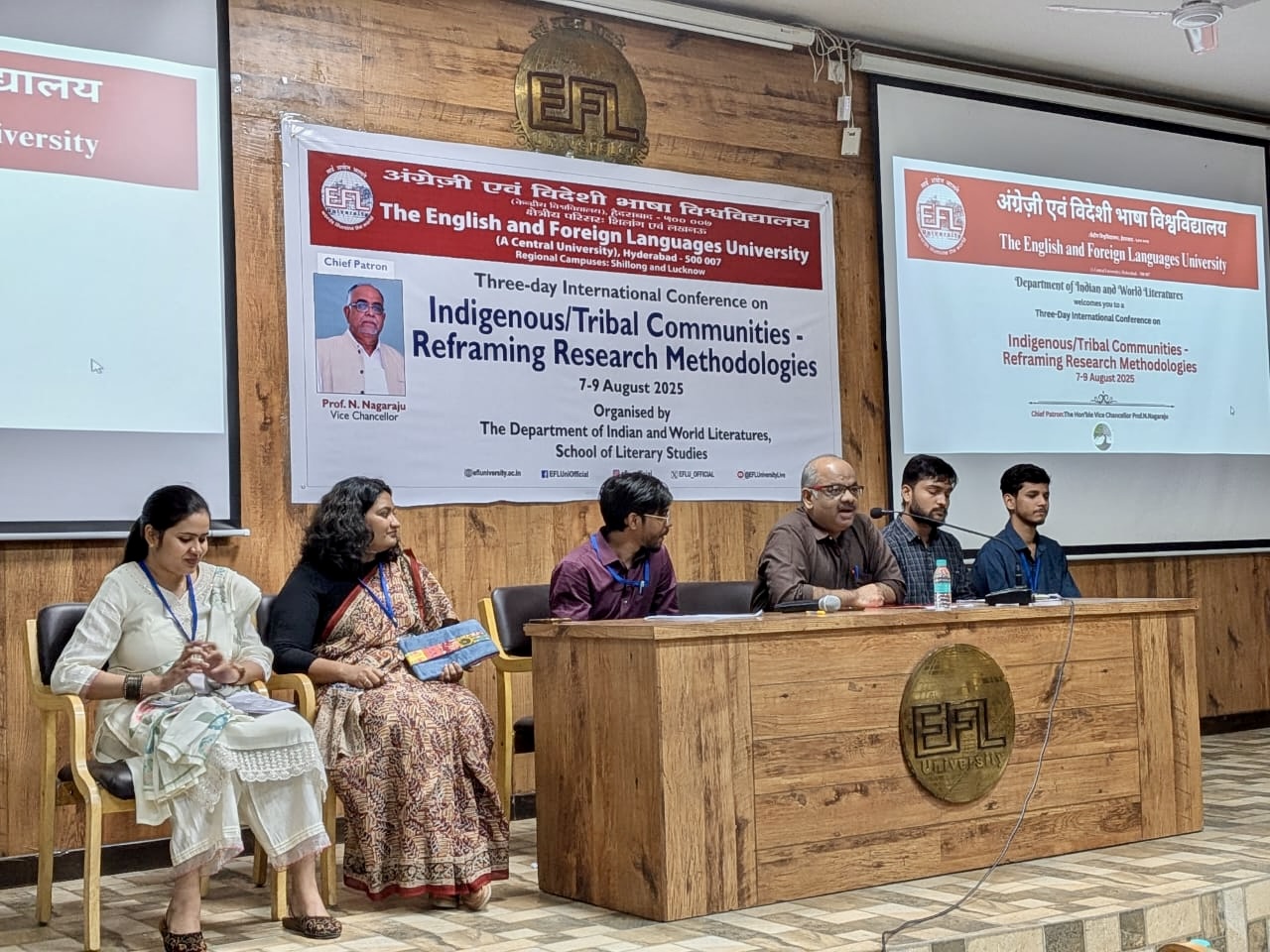
January–February 2025Presented 10 papers at international conferences across narratology, folklore studies, and cultural analysis.
Acknowledged in Economic and Political Weekly for contributions to research on sacred geography.
A computational tool for analyzing narratives using an integrated framework that combines Vladimir Propp’s 31 narrative functions with Ochs & Capps’ five narrative dimensions. Designed specifically for non-Western and non-linear narratives.
Built on the theoretical foundation of Dr. Naji’s doctoral research on the polymorphous Kurichyan tales.
School of Social Sciences and Languages
VIT Chennai
Chennai, Tamil Nadu, India